Bluff
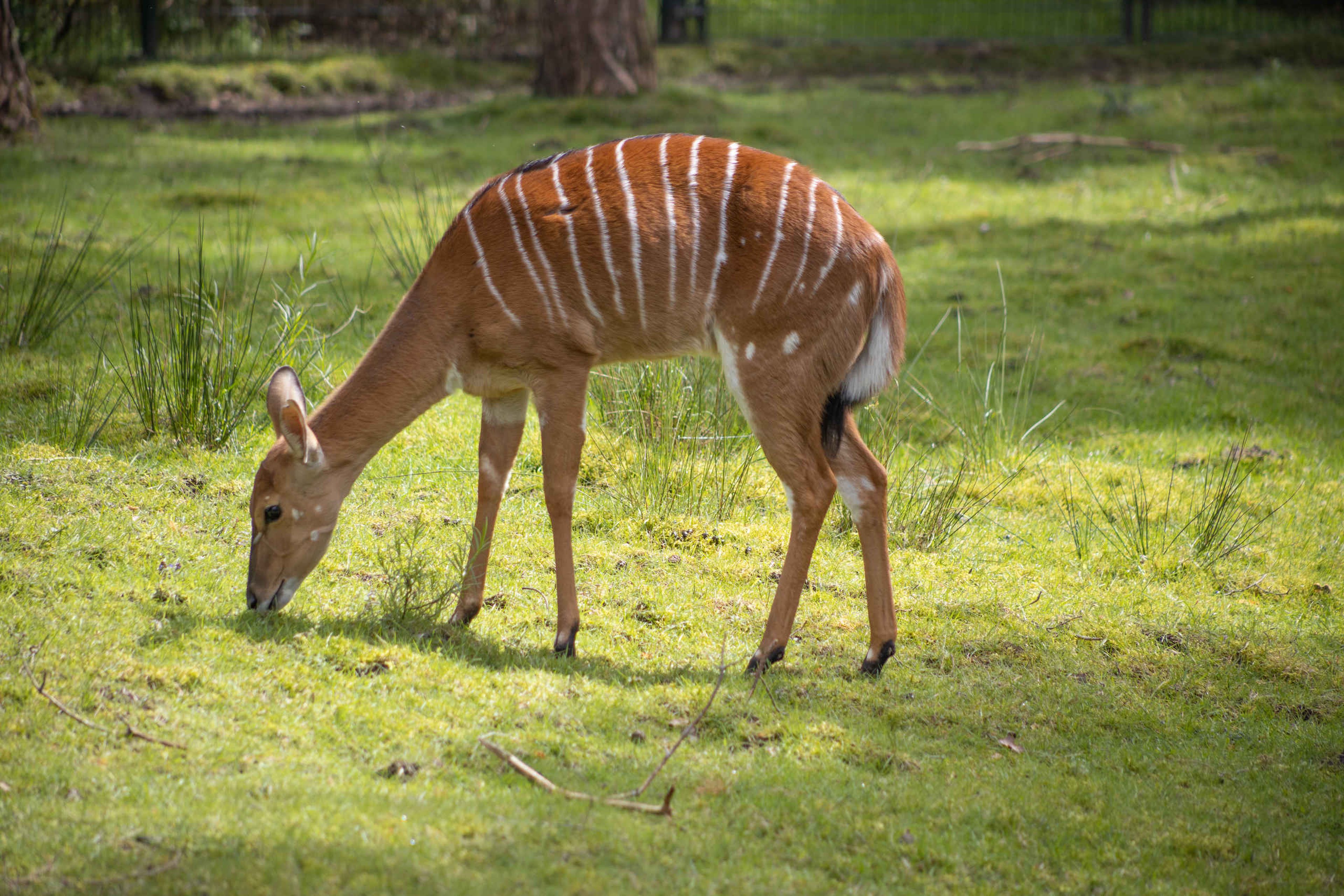
"Male nyalas are larger than females and have dark coats and horns up to 80 centimetres long. Instead of fighting, they impress one another by making themselves look bigger. The largest male usually wins this battle of bluffs and is allowed to mate with the female."
Discover in real lifeHabitat:
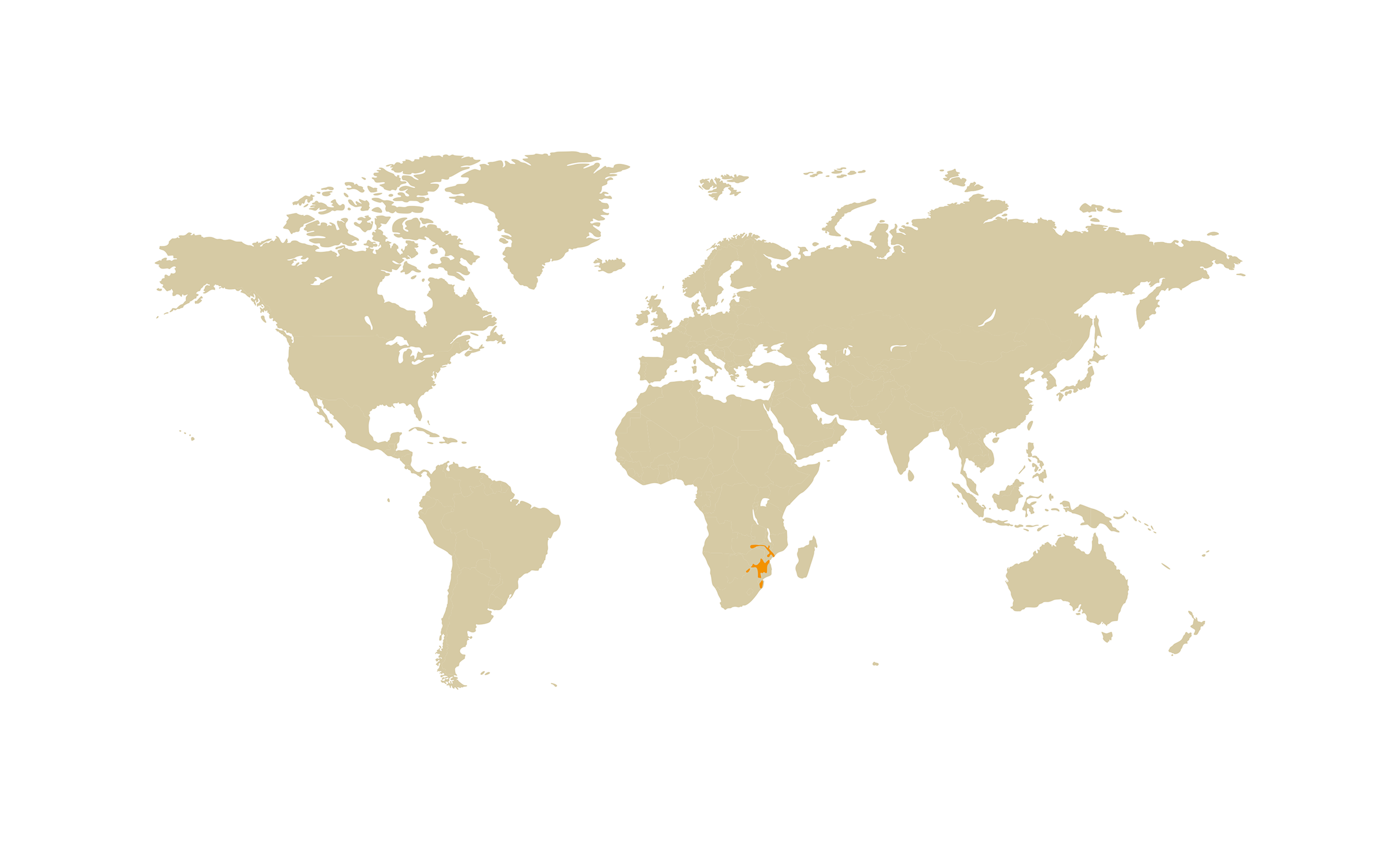
dry woodland areas in south-easst Africa
Food:
leaves, fruit and grass
Lifespan:
16 years
Weight:
male: 100-125 kg; female: 55-70 kg
Number of young:
1 young
Gestation period:
7 months
IUCN status:
Least Concern
EEP:
yes
About the Nyala
The Nyala (Tragelaphus angasii) is a graceful species of antelope found in dry woodlands and dense scrub in south-east Africa. Due to their shy nature, nyalas often remain hidden amongst the bushes during the day. As soon as dusk falls, they set out in search of leaves, fruit and grass. In the wild, they must be on the lookout for predators such as lions, leopards and African wild dogs. When danger threatens, they emit a high-pitched, barking alarm call so that their fellow nyalas can flee in time. Nyalas also listen out for the warming calls of other animals, such as impalas and baboons. Thanks to this cooperation, they are often quickly alerted to approaching danger.
Habitat and threats
The Nyala lives in dry woodland and dense scrubland in south-east Africa. Thansk to its striped coat, it can hide well amongst the vegetation. Nyalas seek shelter here and find leaves, fruits and young shoots to eat.
The nyala currently has an IUCN status of 'Least Concern'. The species is still relatively common across much of its range. However, habitat loss due to agriculture and human development can pose a local threat to some populations.
Species conservation in Beekse Bergen
Did you know that more than 10,000 animal species in the world are in danger of extinction? Beekse Bergen works with about 325 European zoos to conserve these species. Through management programs (EEPs)we ensure healthy reserve populations. Together, we form the European Association of Zoos (EAZA).
The Nyalas at Beekse Bergen are also part of an EEP. A coordinator maintains a pedigree of the species and manages the population in zoos. Together with a committee, the coordinator gives advice on which animals are allowed to have cubs together. Sometimes that means moving a Nyala to another zoo. This way we increase the chance of healthy cubs and the survival of the species. You can recognize animal species with an EEP by the logo of a rhino with a calf.