My Den
"Persian gazelles live in small groups. During the mating season, males establish their own territories, which they mark with scent and feces to attract females and keep rivals at bay.
Discover in real lifeHabitat:
(semi-)deserts in Iraq, Iran, and Azerbaijan
Diet:
grass, twigs, and shoots
Age:
10–12 years
Weight:
Male: 20–43 kg; Female: 18–33 kg
Offspring:
1–4 pups
Gestation period:
5–6 months
IUCN status:
Vulnerable
EEP:
No
About the Persian gazelle
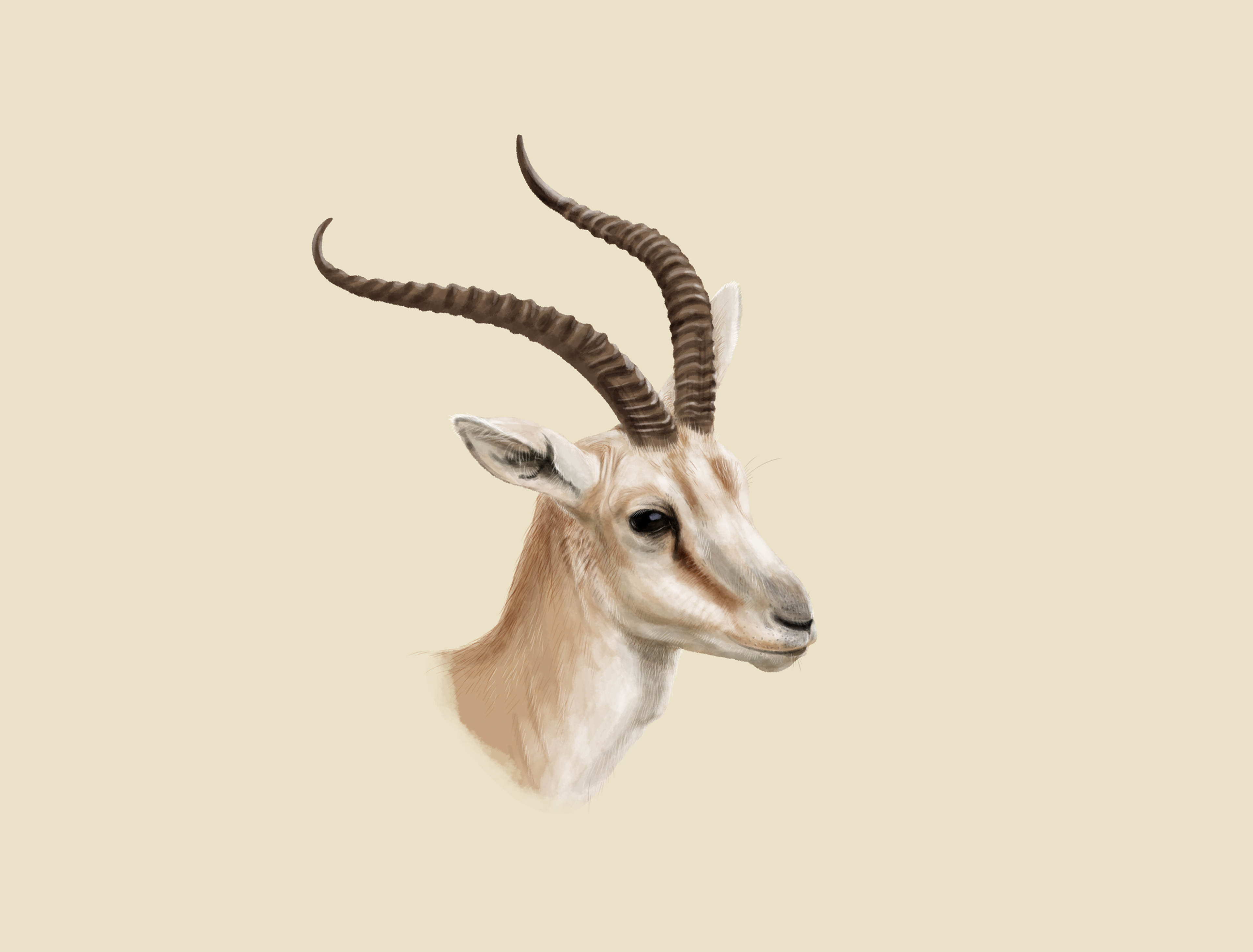
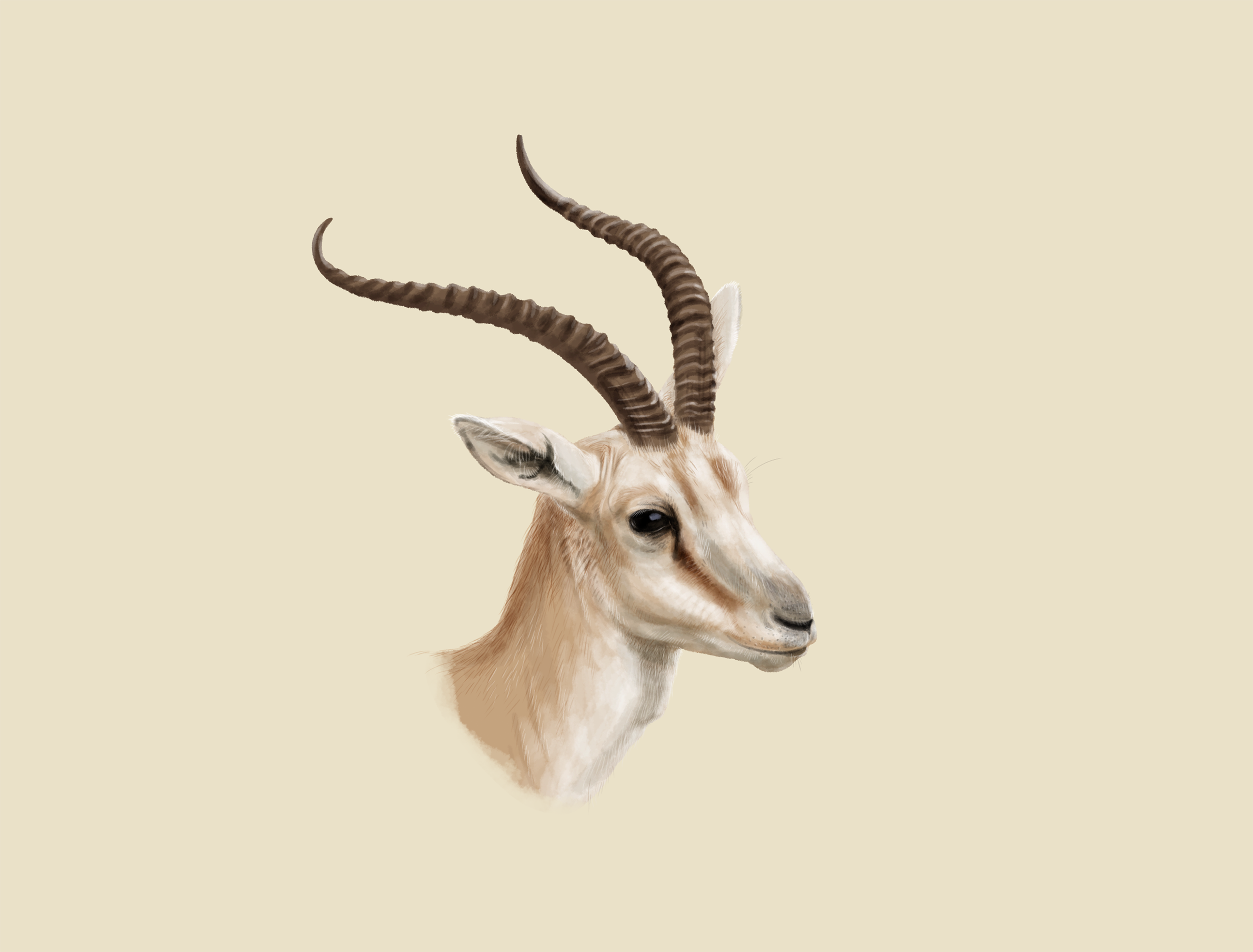
The Persian gazelle (Gazella subgutturosa subgutturosa) is a graceful antelope found in the (semi-)deserts and mountainous regions of Iraq, Iran, and Azerbaijan. In this arid habitat, the animal travels long distances daily in search of food. Crested gazelles eat mainly grass, but also branches and young shoots. To find enough food, they sometimes walk as far as thirty kilometers a day. Remarkably, they hardly need to drink at all: they obtain most of their moisture from the plants they eat. Thanks to their speed, endurance, and adaptability, Persian gazelles are exceptionally well-suited to life in arid regions.
Habitat and threats
The Persian gazelle lives in the dry (semi-)deserts of Irka, Iran, and Azerbaijan. In these vast, open areas, the animals forage for food and use their speed to evade predators.
The species has an IUCN status of “Vulnerable.” Due to habitat loss and fragmentation—caused in part by human activities—suitable habitats are declining. Illegal hunting also remains a threat in some areas. As a result, the future of the Persian gazelle is under pressure.
Species Conservation at Beekse Bergen
The status of the Persian gazelle is vulnerable. Unfortunately, many of the animal species you see at Beekse Bergen are endangered and are struggling in their natural habitats. Did you know that more than 10,000 animal species worldwide are at risk of extinction? Together, we can help them—whether through big or small steps. Want to know how?